2026 How to Choose the Right Radio Auto for Your Vehicle Needs?
Choosing the right Radio Auto for your vehicle can be challenging. With numerous options available, making an informed decision is crucial. The Global Automotive Radio Market is projected to reach $50 billion by 2026. This growth reflects the increasing demand for high-quality audio in cars.
When selecting a Radio Auto, consider your vehicle's specifications and personal preferences. Do you prioritize sound quality, or is user-friendly navigation more important? According to recent surveys, 70% of drivers value Bluetooth connectivity. This feature allows seamless integration with smartphones and other devices.
Many consumers overlook essential factors. The interface should be intuitive, and the radio should fit your car's aesthetic. While choosing a popular brand may seem safe, lesser-known options can offer unique features. Reflect on your needs to find the best fit.
Understanding Your Vehicle's Audio System Requirements
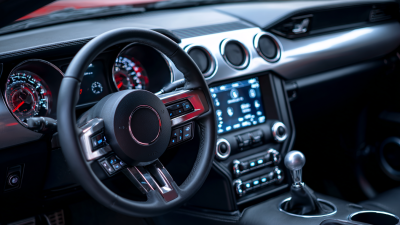
Understanding your vehicle's audio system requirements is essential for making the right radio choice. Each car has its unique audio setup. Knowing whether you have a basic system or a more advanced one will guide your decision.
Consider the size of the radio. Some cars have limited space, while others can accommodate larger units. Compatibility is key. Check if your vehicle's wiring is standard or unique. This detail affects installation. Don't forget about features you desire. Streaming capabilities or Bluetooth might be essential for you, but ensure they fit your system.
Sound quality often matters more than flashy features. Listen to different setups if possible. Adjust your expectations based on what you hear. Some systems may struggle with bass, while others excel. Aim for balance in sound. Sometimes, deeper bass can overwhelm the clarity of vocals. Reflect on what truly enhances your driving experience. Prioritize accordingly.
Evaluating the Different Types of Radio Units Available
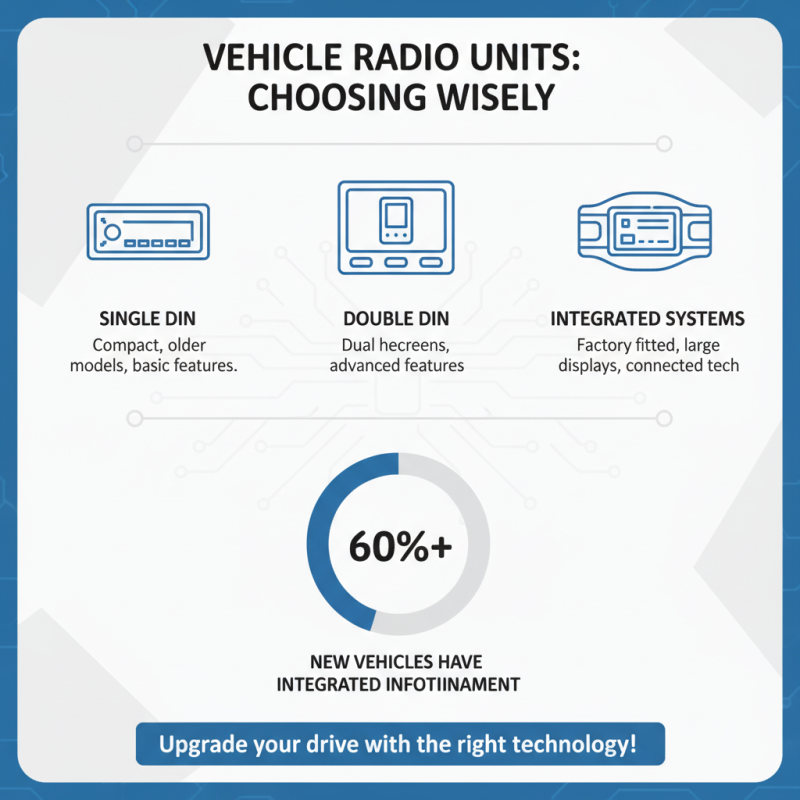
When it comes to selecting the right radio unit for your vehicle, understanding the options is crucial. Radio units come in various types, including single DIN, double DIN, and integrated systems. Each has unique features and fits different vehicle models. According to a recent industry report, over 60% of new vehicles now include integrated infotainment systems. This shift indicates a growing preference among consumers for technology that complements their driving experience.
Choosing the right type may feel overwhelming. For those who favor customization, a single DIN unit offers flexibility. These models can fit into smaller spaces and allow for various integrations. Double DIN units provide a larger interface, ideal for advanced navigation and larger displays. A major consideration is sound quality. Research shows that a unit with built-in amplifiers can enhance audio output significantly.
**Tip:** Consider if you want Bluetooth or USB connectivity. These features are essential for modern driving needs. Audio streaming from smartphones is now a common demand.
Reflect on your listening habits. Do you prefer local stations, extensive music libraries, or podcasts? Knowing your preferences can lead to better choices. Not every unit will cater to serious audiophiles. Some models may lack adequate equalizer controls. Explore models that allow for adjustments to suit your taste.
Key Features to Consider When Choosing a Car Radio
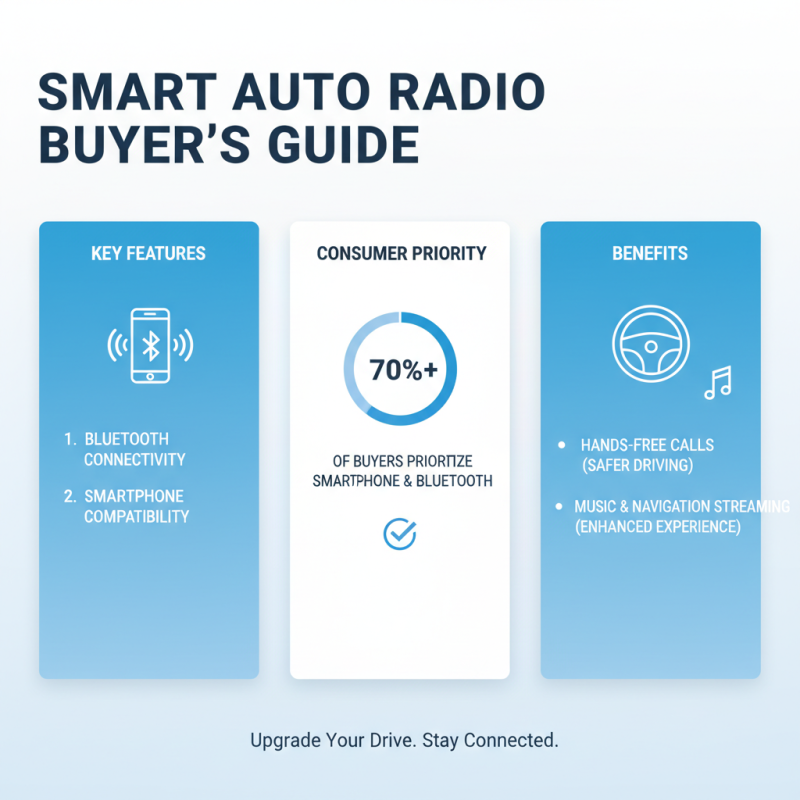
When choosing a car radio, consider several key features that enhance both functionality and convenience. According to industry reports, 70% of users prioritize Bluetooth connectivity. This feature allows hands-free calling and music streaming, which improves road safety. Connectivity options like USB and auxiliary ports also matter. With 30% of consumers citing these as essential, ensure your chosen model supports current technology.
Sound quality plays a crucial role too. Look for radios with built-in equalizers to fine-tune audio settings. A survey revealed that 65% of drivers notice significant differences in sound when choosing features like adjustable bass and treble. Furthermore, consider user interface design. An intuitive touchscreen can make navigation easier. However, simpler designs often lead to less distraction while driving.
It's essential to evaluate your specific needs. For instance, if you favor satellite radio, verify compatibility before purchasing. Not all models support this feature. A report indicated that 40% of users regret not verifying compatibility, leading to frustration. It’s vital to reflect on how you use your car's audio system. This approach can guide your decision-making process effectively.
Compatibility with Smartphone and Bluetooth Connectivity Options
Choosing the right radio auto for your vehicle can be daunting. Focus on compatibility with smartphones and Bluetooth connectivity options. A survey found that over 70% of consumers prioritize these features. Bluetooth allows hands-free calls, making driving safer. A seamless connection with your smartphone can enhance your driving experience through music and navigation.
Tips for selecting your radio auto include checking the Bluetooth version. Newer versions offer better connectivity and increased range. Additionally, look for models with user-friendly interfaces. An interface that mirrors your smartphone’s design can reduce distractions while driving. Some radios even come with voice command features, which can be a game changer.
Not all Bluetooth connections are equal. Some consumers report issues with pairing and audio quality. It's crucial to read reviews about actual user experiences. Testing the unit before purchase, if possible, ensures it meets your connectivity needs. Remember, compatibility varies with different mobile devices, so verify specifications to avoid surprises.
Installation Options: Professional vs. DIY Installation
When it comes to installing a new radio in your vehicle, you have two main options:
professional installation or DIY. Each path has its advantages and challenges.
Professional installation often ensures high-quality work and a worry-free experience. You can enjoy peace of mind,
knowing the job is handled by an expert. However, this option can come with a hefty price tag.
DIY installation can be tempting. It offers the thrill of hands-on work and can save you money. Yet, without the
right skills, you may face issues. Miswiring could lead to malfunction or damage.
Be prepared for some trial and error. It’s important to research thoroughly and understand your vehicle’s
system before proceeding.
Tips: Gather all necessary tools before starting. A well-prepared workspace can make a
big difference. Watch video tutorials that cater to your specific vehicle model. They can provide invaluable
guidance. Also, don’t hesitate to ask questions on forums.
Embrace the learning curve; it can be rewarding!

 +86-18126757325
 CONTACT NUMBER
 CONTACT NUMBER