+86-18126757325


When it comes to the perfect driving experience, a high-quality car audio system is essential. Imagine cruising down the road with crystal-clear sound filling your vehicle. The right audio system can elevate your mood and enhance your journey. However, choosing the best car audio system is not always straightforward.
Many features can drastically impact sound quality. These include components like speakers, amplifiers, and head units. Each element plays a distinct role, shaping the overall experience. Yet, making informed decisions can be challenging due to the overwhelming options available. It's easy to get lost in jargon and marketing buzzwords.
Understanding the critical features of car audio systems is vital for getting the best sound. By delving deeper into specifications and personal preferences, you gain clarity. This guide aims to highlight indispensable features for an exceptional sound experience. Reflect on your listening habits and car environment. Your ideal setup may differ from others, but it is attainable with careful consideration.
When it comes to car audio systems, speaker quality plays a pivotal role in sound performance. Quality speakers deliver clearer and more dynamic sound. They can significantly enhance your driving experience. Poor speakers may distort audio and fail to reproduce bass accurately. It's imperative to choose speakers that suit your music style and listening habits.
Consider the material of speaker cones. Polyester or polypropylene cones tend to offer better sound quality. They provide durability and efficiency. Look into the size and power handling capabilities of the speakers, too. Larger speakers can produce deeper bass, while smaller ones may excel in higher frequencies. Acoustic space in your vehicle also affects sound. Be aware that mounting locations impact the audio output.
Tips: Test different speakers before purchase. Listen to various genres to ensure they fit your taste. Installation plays a crucial role in sound quality. Hiring a professional can save time and enhance audio performance. Don’t overlook the importance of matching the speaker specifications with your stereo system. This ensures optimal synergy and sound delivery. Reflect on your listening preferences, and choose accordingly to elevate your audio experience.
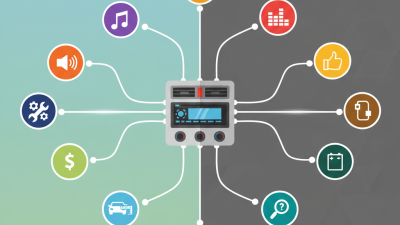
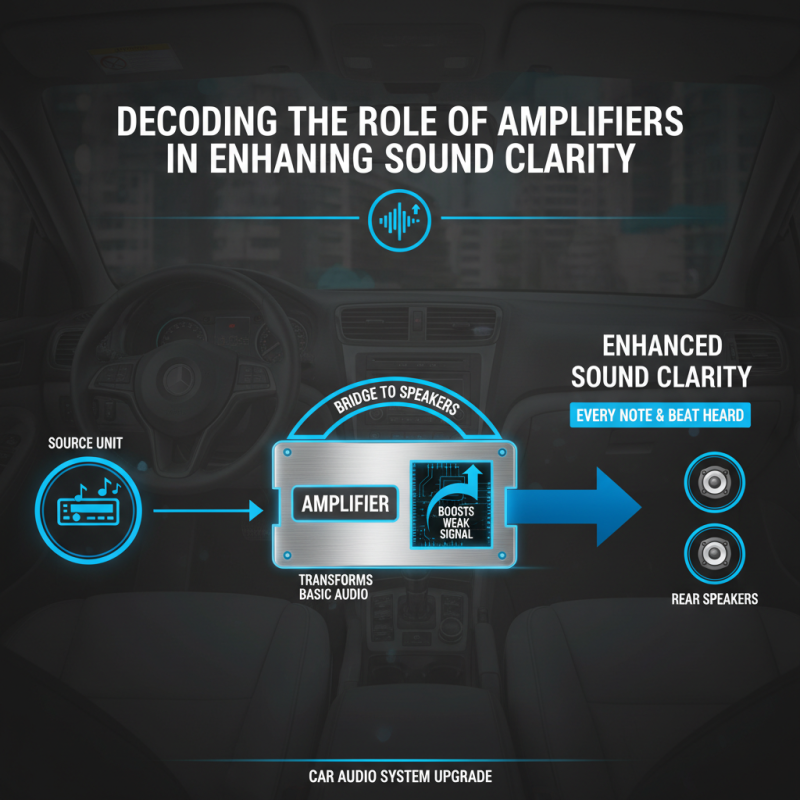
When setting up a car audio system, amplifiers play a crucial role in sound clarity. An amplifier boosts the weak audio signal from your source, ensuring that every note and beat is heard. It acts as a bridge between your head unit and the speakers, transforming basic audio into impressive sound.
Choosing the right amplifier requires understanding its power rating. More power often means better sound dynamics. However, an overly powerful amplifier can distort sound. Users should aim for balance, optimizing between power and clarity. Be mindful of impedance compatibility. Mismatched impedance can lead to overheating or system failure.
Tips for amplifier selection: check the RMS rating for a clearer sound representation. A well-matched amplifier to your speakers can make a world of difference. Remember, more expensive doesn’t always mean better. Research and try different models to find the right fit. Do not overlook the importance of installation. Properly installing the amplifier ensures optimal performance and longevity.
When it comes to car audio systems, subwoofers play a vital role in enhancing bass performance. They are designed specifically to reproduce low-frequency sounds, providing a depth that standard speakers often lack. According to a 2022 industry report, adding a dedicated subwoofer can improve bass response by up to 30%. This means your music can feel more immersive and dynamic.
Installing a high-quality subwoofer can significantly elevate the auditory experience. It allows you to feel the vibrations of bass-heavy music, creating a more engaging atmosphere. However, not all subwoofers are equal. A poorly matched subwoofer may distort sound instead of enriching it. Proper tuning and placement are crucial to achieve optimal results.
Many enthusiasts argue that selecting the right enclosure for a subwoofer is just as important. Research indicates that a sealed box can deliver tighter, punchier bass, while a ported box offers greater volume. The choice depends on individual listening preferences and music genres. Balancing power output, speaker sensitivity, and enclosure type may require trial and error. This process of experimentation can deepen your understanding of sound engineering. It’s a journey that sharpens your skills and judgment as a listener.
| Feature | Description | Impact on Sound Quality |
|---|---|---|
| Subwoofers | Enhances low-frequency sounds for a richer bass experience. | Significantly improves bass performance and overall sound depth. |
| Amplifiers | Boosts audio signal power to avoid distortion and enhance clarity. | Crucial for achieving high sound quality at higher volumes. |
| Speakers | Converts electrical signals into sound; higher quality speakers deliver clearer audio. | Directly affects fidelity and clarity of all audio frequencies. |
| Equalizers | Allows users to adjust frequency levels to balance sound according to personal preference. | Helps to tailor the sound to compensate for vehicle acoustics. |
| Installation | Proper installation is crucial for optimal system performance. | Ensures all components function harmoniously without interference. |
| Head Unit | The control center for audio; integrates various sources and settings. | Determines the overall sound processing quality. |
| Sound Deadening Materials | Reduces ambient noise in the vehicle to enhance audio clarity. | Improves audio experience by minimizing external disturbances. |
| Connectivity Options | Includes Bluetooth, USB, and AUX for versatile audio streaming. | Enhances user convenience and audio playback options. |
| Crossover Networks | Directs specific frequency ranges to appropriate speakers. | Ensures clarity and prevents distortion across the audio spectrum. |
| Power Handling | Measures how much power an audio component can handle safely. | Critical for preventing damage and achieving maximum sound output. |
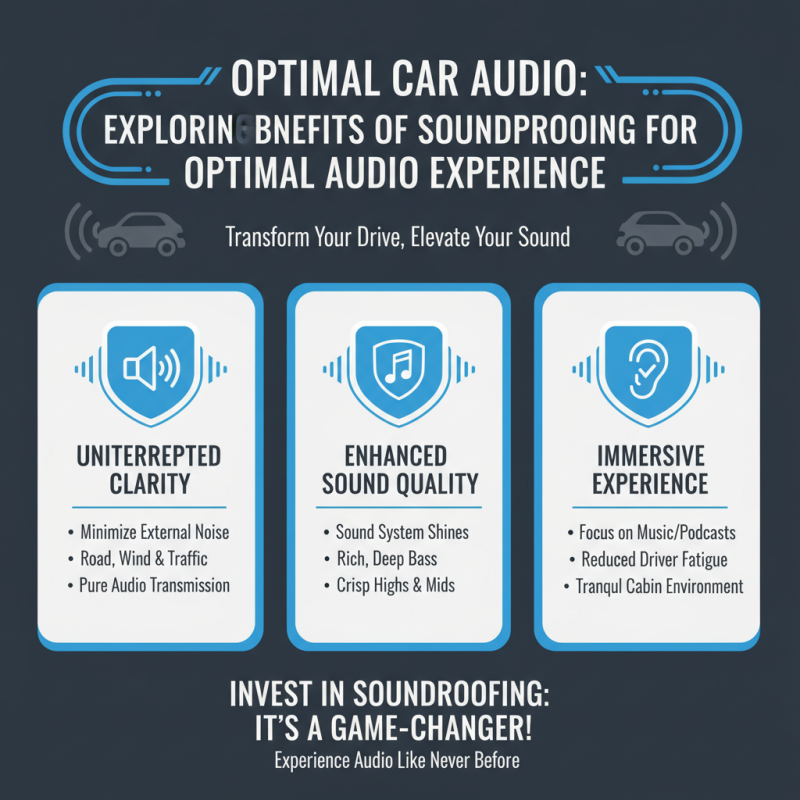
Soundproofing your vehicle can dramatically enhance your audio experience. By minimizing external noise, you create an environment where your sound system can shine. Unwanted sounds from the road, wind, and traffic can muddle audio clarity. Thus, investing in soundproof materials can be game-changing.
For optimum results, consider using materials like acoustic foam and mass-loaded vinyl. These effectively absorb sound waves and block noise. When soundproofing, focus on your car’s doors, floor, and trunk. This ensures a more isolated cabin, allowing high-quality audio from your speakers.
Tips: Ensure surfaces are clean before applying soundproofing materials. A solid bond improves effectiveness. Additionally, don’t overlook the windows; specialized window film can reduce noise intrusion.
While soundproofing has benefits, it’s not without challenges. The process can be time-consuming and sometimes costly. Depending on your car model, finding the right fit for materials can be tricky. However, these small obstacles can lead to a more immersive listening experience, making it worth the effort.
When considering modern audio systems, the choice between wired and wireless connectivity plays a crucial role. Wired connections, like RCA and auxiliary cables, often deliver superior sound quality. They provide a stable, interference-free signal. Audiophiles praise the clarity found in wired systems. However, they can limit placement options within the vehicle.
On the other hand, wireless options offer flexibility. Bluetooth and Wi-Fi enable easy connections to various devices. Users can stream music from smartphones effortlessly. Yet, wireless systems often compromise sound fidelity. Compression can affect audio quality. Additionally, connectivity issues may arise, causing frustration during use.
Evaluating these options requires weighing convenience against sound performance. Some may prefer the simplicity of wireless systems. Others may favor the reliability of wired setups. Each choice comes with trade-offs. It's essential to reflect on your priorities when selecting an audio system.